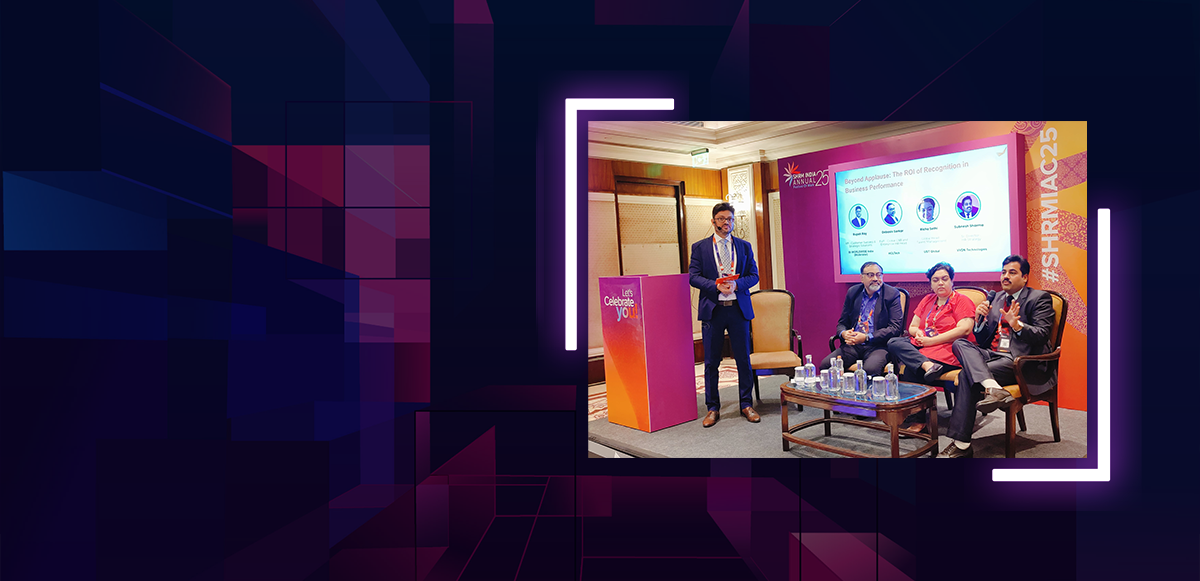
Beyond Applause: The ROI of Recognition in Business Performance
Recognition is evolving. It’s no longer just an engagement or cultural practice – it’s becoming a business strategy. At BI WORLDWIDE, we place recognition at the intersection of engagement, culture and business results.
Recognition fuels engagement by making people feel valued. However, engagement alone can ebb and flow over the lifecycle of an employee and an organisation, as they go through successes, changes and challenges. That’s where culture kicks in.
A culture of recognition sustains performance by continuously reinforcing the key behaviours and outcomes that matter to your business. Our global New Rules of Engagement research backs this up – the more employees you recognise, the stronger your culture of recognition. When ALL employees are recognised, they feel connected to the culture, driving business results:
Employees who feel included are 6X more likely to put in maximum effort,
17X more likely to say that their work brings out the best ideas, unlocking results that matter.
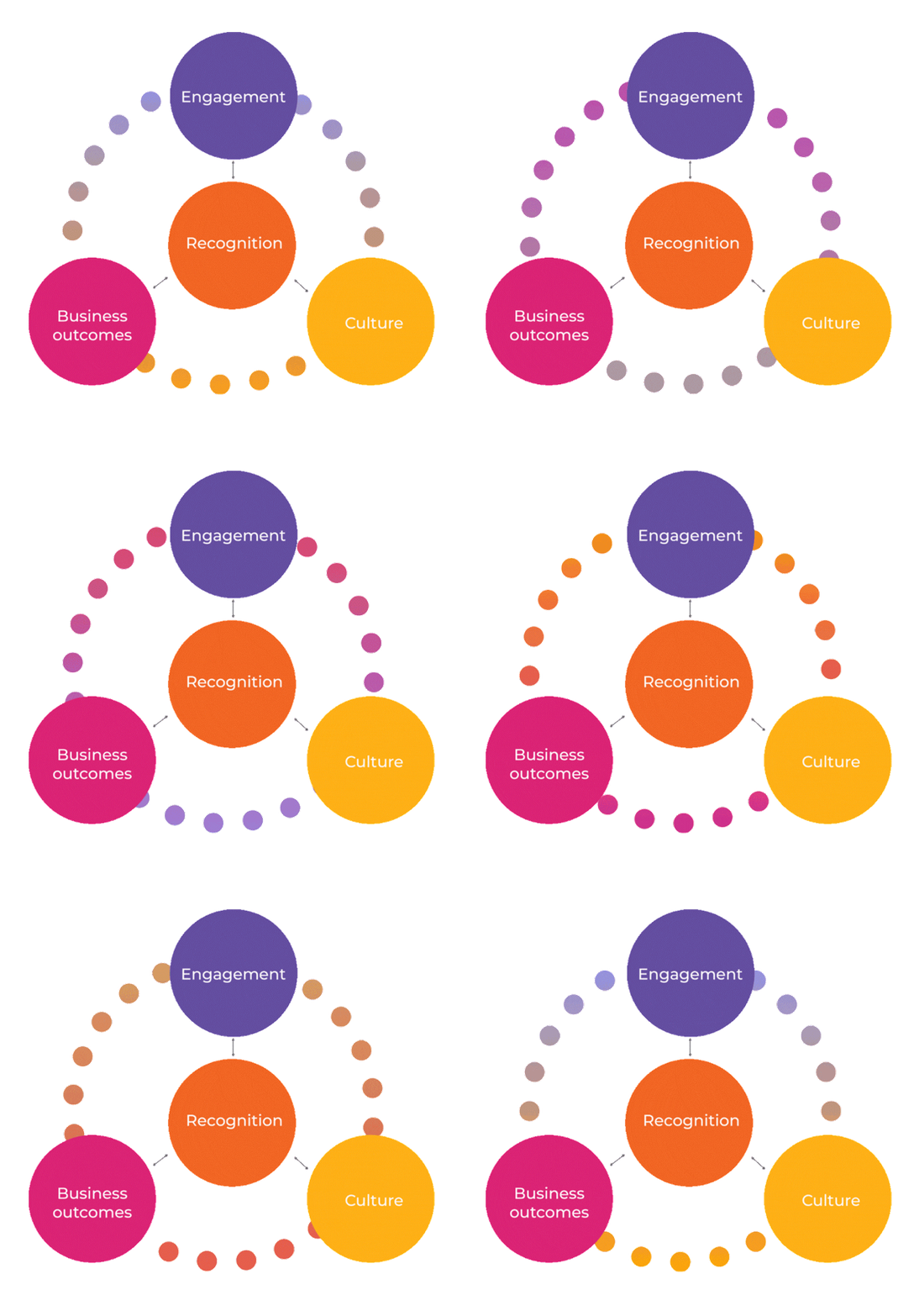
The message is clear: Recognition is not just central to employee engagement programs, but also to work culture and when executed strategically, to business outcomes.
At SHRM India Annual Conference 2025 industry’s most niche gathering of experts in R&R space, BI WORLDWIDE hosted an exlusive panel discussion to reinforce this message and help HR leaders turn their recognition spend into bottomline.
Rupak Ray, VP – Customer Success & Strategic Solutions (BI WORLDWIDE India) brilliantly led the session – Beyond Applause: The ROI of Recognition in Business Performance, featuring people-first CHROs and HR leaders from top organisations – Debasis Sarkar, EVP – Global C&B and Enterprise HR Head (HCLTech), Richa Sethi, Global Head – Performance & Talent Management (UST Global) and Subnesh Sharma, Sr. Director – HR Strategy (VVDN Technologies).
Next wave of recognition: Not just inspiration-driven, but impact-driven
The session spotlighted how Rewards and Recognition (R&R) programs are transforming from an engagement or culture-building initiative to a strategic business growth enabler.
Traditionally, engagement and culture have long been the goalposts for R&R programs. However, when it comes to measuring the impact of R&R programs, HR leaders often end up with transactional metrics like total number of recognitions, volume of redemptions, types of rewards redeemed, etc. No focus is laid on measuring the real business impact through metrics like productivity, talent retention, customer satisfaction and more.
So, it’s time to elevate R&R programs from just a ‘feel-good’ initiative to a data-driven business performance lever.
Measuring the business impact of recognition
The session opened up with a thought-provoking question – How are leading organisations tracking the business results of R&R programs?
Highlighting how new-age R&R programs are tied to business results, Debasis Sarkar remarked, “R&R programs can vary from being soft-touch (instant recognition) to hard-touch (coveted recognition), for catering to a mix of generations in the workforce and drive diverse business KPIs. While the first level outcome of R&R is soft-touch – instant engagement, it often drives hard-touch outcomes in the long run, leading to retention, productivity, succession planning of leadership and more.”
Debasis backed his insight with the instance of HCL’s niche R&R program – Superchargers League. The program selected top 50 leaders in the organisation, after a rigorous nomination and screening by business heads, including the CEO. Finally, the 50 leaders would be felicitated at a grand awards ceremony, in the presence of directors and senior board members. This hard-touch, coveted positioning of the R&R program was a strategic move towards a precise business outcome – building the next generation of leadership, ready to take up additional responsibilities.
Similarly, Richa Sethi underlined the importance of data-driven R&R programs, that empower top organisations to drive business results, stating, “What gets measured often turns into a business imperative. Tracking data-driven insights from R&R programs like – change in retention, discretionary efforts by teams, client outcomes, etc. – can link recognition directly with strategic organisational priorities.”
The panellists also shared other actionable strategies to elevate the business impact of R&R programs:
- Make recognition humanised and personalised, not just tech-driven, inspiring employees to go the extra mile.
- Build recognition into your talent ecosystem. Make it a key consideration in career advancement and performance reviews, motivating employees to deliver their best.
- R&R shouldn’t be a one-off employee engagement program. Sustain a culture of recognition to drive business outcomes in the long run.
- Change the paradigm of R&R from recognising a select few to being a strategic driver of how your work culture essentially operates.
- R&R shouldn’t be one-size-fits-all. Identify what motivates different roles across your organisational hierarchy to drive the desired behaviours from every employee. Decoding the right frequency of recognition for each role also contributes towards business results.
Elevating business results with value-driven recognition
The industry experts shared another fascinating insight – aligning R&R with core organisational values reinforces positive behaviours across the workforce, leading to strategic business results.
Richa Sethi put it brilliantly, “Every time you celebrate employees living your values, it sets off a ripple effect – reinforcing the very behaviours across the organisation that move your business forward.”
She cited the example of UST’s R&R program called UST Handprint, that incentivised desired value-led behaviours across the board, turning organisational values into everyday culture.
The key takeaway? R&R cannot operate in silos; it must be tied to strategic organisation-wide initiatives to amplify business results. Moreover, R&R should be proactive, not reactive in nature, celebrating the entire journey – the right behaviours along the way, that lead to measurable business outcomes.
Proven, real-world business impact: Amplifying financial excellence through recognition
That’s exactly what BI WORLDWIDE did for a global healthcare tech brand, that aspired improving its free cash flow conversion by 80% over 2-3 years, so they could reinvest in their business and people. (Free cash flow is cash left after deducting expenses from total revenue).
Business Challenge: Many of the brand’s 95,000 employees could not even define free cash flow.
Solution: BI WORLDWIDE empowered the brand to tap into its strong culture of recognition, providing the momentum for achieving the desired goal. Recognise – a unique engagement and recognition program was designed, as a launchpad for the Free Cash Flow Challenge. The program converted the strategic goal into everyday values, culture and behaviours, motivating employees with exciting rewards, recognition and gamified experiences. Nomination awards, quizzes, idea schemes, rewards budget, gamified training and more were introduced, sparking enthusiasm in employees to step up to the challenge and make a real difference.
Result: The goal of 80% free cash flow conversion over 2-3 years, was achieved within only 1 year.
The key takeaway: R&R done right = ROI you can measure
The future of recognition is here: strategic, measurable and results-driven. Today’s HR leaders are more than culture champions; they need to become architects of business strategy. The future of work will belong to those who connect employee engagement solutions and programs directly with results that matter.