
Your Result: Shared Ownership
Engagement grows when employees feel they truly belong and share in your organization’s future. Your results show the next step is strengthening connection, transparency, and vision—so your people feel included, valued, and inspired to give their best.
Your snapshot results
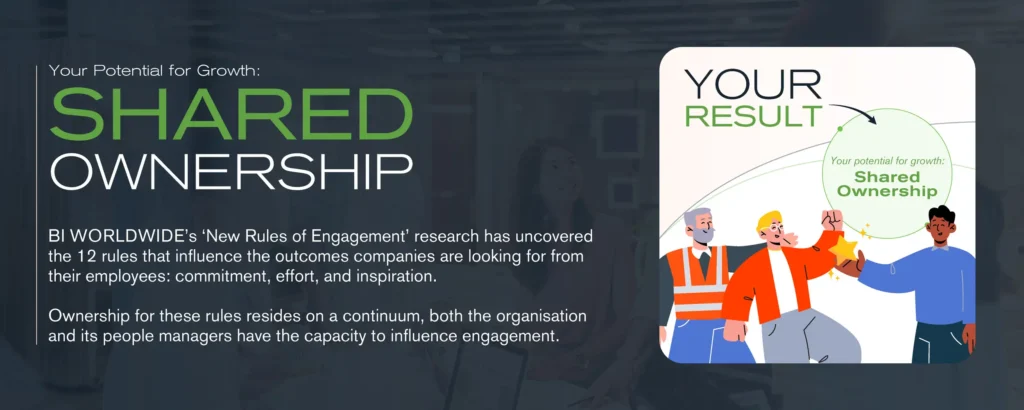
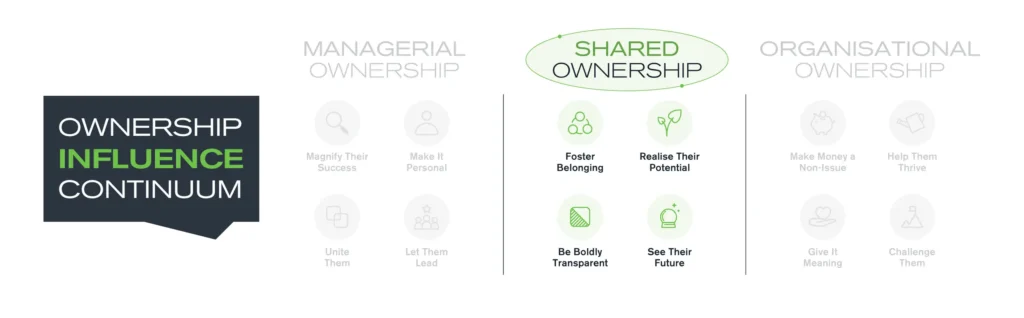
Shared Ownership refers to the rules in the New Rules of Engagement that can be influenced by the behaviours of both your people managers and by the organization.
Read below for insight into some of the ways people managers and the organization can impact the overall experience of your employees, and to learn more about the New Rules of Engagement.
Why Shared Ownership matters
Many elements of the everyday employee experience impact engagement. However, in our New Rules of Engagement research, only one element of work lands in the top three for predicting commitment and performance: a sense of a promising future at an organization. This is only achieved if both the managers and the organization are working together and sharing this responsibility.
A key component of sensing a promising future in an organization comes from a sense of belonging, now and in the future. When employees feel as if their current organization presents a promising long-term opportunity, they respond by not only committing to that organization but also working harder daily.
Research shows that when an individual feels safe, seen and valued; engagement, motivation, and performance increases. At the heart of that is inclusivity. If we feel included, we’re…
- 17x more likely to say ‘working brings out our best ideas’.
- 15x more likely to find work inspiring.
- 77% more likely to recommend our organization to others.
It’s also clear from our research that a more inclusive, equitable and fair workplace has a positive impact on the employee experience, as well as on the business results, but multiple studies show there’s still plenty of room for growth.
According to a study by the NY Times there are fewer Fortune 500 CEOs who are women (4.1%), than who are named David (4.5%) or John (5.3%).
To ensure your employees feel as though they belong and can see their future,true equity and inclusion needs to be ingrained in your culture. That takes time and unwavering commitment.
Behaviours that bring it to life
Shared ownership flourishes when leaders are inclusive, transparent, and forward-looking. These behaviours transform shared purpose into daily engagement.
The New Rules of Engagement study identified 12 rules to focus strategies on to foster commitment and improve performance. The following four are influenced by both your people managers and organization:
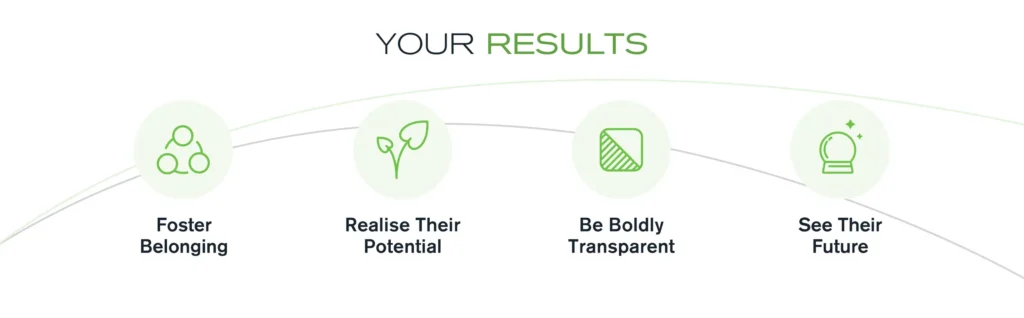
- Foster Belonging: Build a workplace where every voice is valued and differences are celebrated.
- Realise Their Potential: Show employees how their strengths matter to the organization’s success.
- Be Boldly Transparent: Share openly and honestly to build trust and credibility.
- See Their Future: Help employees envision long-term growth and opportunities with you.
Ready to put your results into action?
Click here to read more about these rules and why they’re important to your organization and your employees’ engagement.
At BI WORLDWIDE, our solutions are designed to support people managers and organization leaders to ensure the effectiveness of the programs we deliver.
Want to know how a culture of recognition can help to foster belonging and inclusivity? Get in touch with us today.