
How to leverage the intersection of recognition, redemption and retention
Learn how recognition and reward redemption work together to increase engagement and support long‑term employee retention.
When recognition is done well, it sparks motivation. But it’s what happens next that determines whether that motivation fades or turns into lasting engagement and loyalty.
At BI WORLDWIDE, we see this moment play out every day. Recognition may start the journey, but redemption is where it becomes real.
Our latest insights from the Recogdemption report highlight a critical truth: redemption isn’t just about claiming a reward. It’s a powerful emotional moment, one that turns appreciation into action and sets the tone for long‑term retention.
Why reward redemption deserves more attention
Recognition is often described as the engine of employee engagement. But redemption is the point where employees feel the value of that recognition in a tangible, personal way.
Through the Recogdemption report, BI WORLDWIDE explored the intersection of recognition, redemption and retention, identifying how these three elements reinforce one another. The insight is clear: redemption acts as a cultural signal, a behavioural driver and a strategic lever for organisations looking to sustain engagement.
When redemption is delayed, unclear or underwhelming, recognition loses momentum. When it’s done well, it transforms behaviour.
The redemption effect on employee behaviour
In the report, redemption is defined as the moment an employee exchanges recognition points for something meaningful, whether that’s merchandise, experiences or development opportunities.
But the real value isn’t in the item itself. It’s in the emotional reinforcement.
When employees redeem rewards, they internalise the recognition they’ve received. Morale lifts. Motivation strengthens. Loyalty deepens. And importantly, redemption is visible. When others see rewards being redeemed, appreciation becomes part of everyday culture, not a background initiative.
Recognition starts the story.
Redemption makes it stick.
Understanding redemption behaviour: spenders and savers
Not all employees engage with rewards in the same way. Recogdemption insight highlights two clear behavioural profiles:
- Spenders
Employees who redeem frequently – typically every six months – after around five to six recognition moments. - Savers
Employees who wait longer, often redeeming every 12 to 24 months, usually after eight to twelve recognitions.
Neither approach is right or wrong. But understanding these behaviours is essential for designing recognition and reward programmes that work for everyone.
For spenders, success depends on a steady flow of recognition and a rewards catalogue that feels fresh and relevant.
For savers, the opportunity lies in gentle encouragement – wishlists, reminders and personalised messages that make redemption feel achievable, not distant.
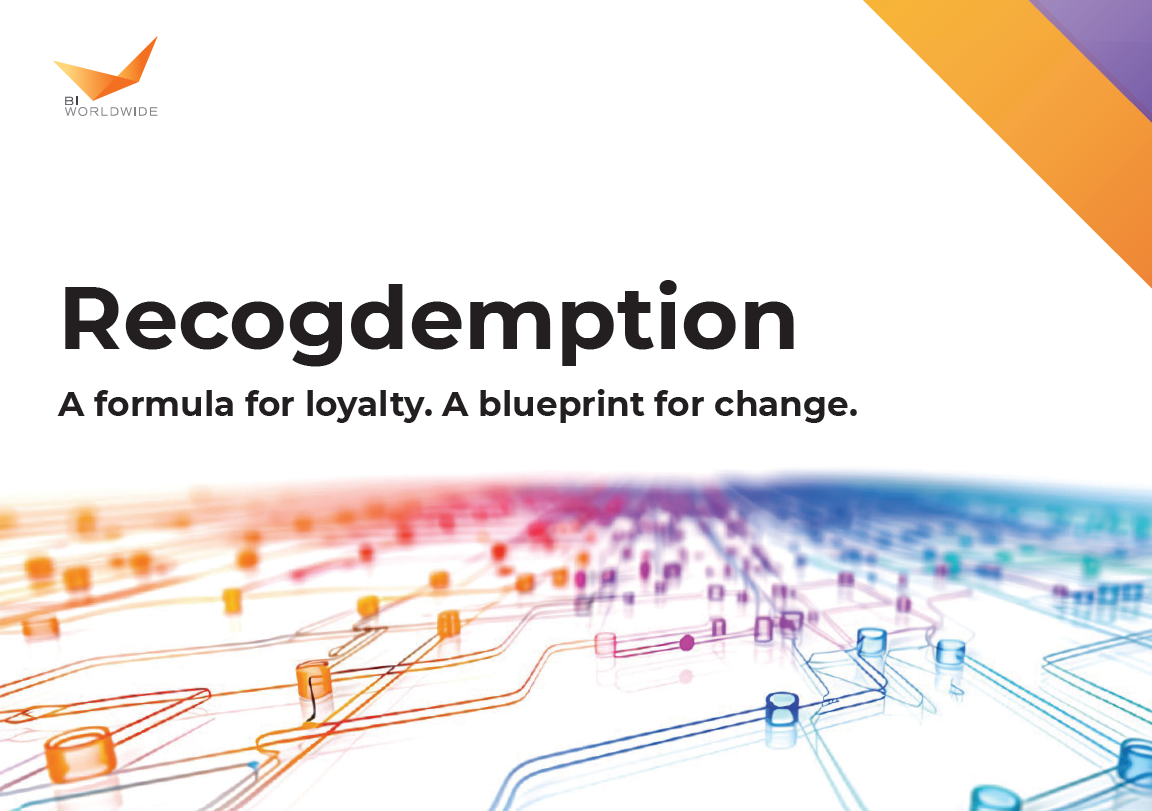
Curious how redemption behaviour differs across roles, regions and cultures?
The Recogdemption report explores global recognition and redemption patterns based on data from nearly one million employees worldwide.
Why the first redemption matters
The first redemption is a turning point.
On average, employees interact with the rewards platform five times before redeeming for the first time. Once they do, two out of three return to redeem again within the next three months.
In practice, this marks a shift. Employees move from passive participation to active engagement. Recognition stops feeling abstract and starts feeling personal. It signals that effort is noticed, and rewarded, in ways that matter.
For organisations, this first redemption is a moment worth designing for, not leaving to chance.
Redemption is most powerful when it follows meaningful appreciation early in the employee journey. Organisations that prioritise early recognition and employee loyalty consistently see stronger engagement and longer tenure as a result. In practice, that often looks like a predictable rhythm of appreciation in the first six months – and in many programmes, six early recognition moments become the trigger that accelerates first redemption and ongoing participation.
The $200 tipping point
What motivates that first redemption? The data reveals a clear psychological and strategic sweet spot: $200 (approximately £150).
Rewards below this threshold play a crucial role in encouraging early redemption and building momentum. They feel attainable and close enough to reach quickly.
But higher‑value rewards tell a different story.
While 83% of reward orders are under $200, they represent just 40% of total order value. The remaining 17% of rewards (those over $200) account for 60% of total value.
These aspirational rewards carry disproportionate emotional impact. They’re more memorable, more meaningful and more effective at driving long‑term engagement.
The data sends a clear message:
Aspirational rewards matter.
Designing recognition programmes that maximise redemption
To unlock the full power of redemption, organisations need to be intentional in how programmes are designed and managed.
That means:
- Balancing the rewards catalogue
Offer desirable, attainable rewards to trigger early redemptions, alongside aspirational options that inspire sustained performance. - Segmenting by behaviour
Tailor communications for spenders and savers, based on how they interact with recognition and rewards. - Encouraging first redemptions
Use nudges, wishlists, and targeted messaging to guide employees toward that critical first moment. - Tracking and optimising continuously
Monitor redemption patterns and adapt rewards to reflect changing preferences and emerging trends.
Redemption works best when it’s easy, encouraging and meaningful, not complicated or delayed.
Redemption as a cultural signal
Redemption isn’t just a personal milestone. It’s a visible expression of organisational culture.
When employees see their peers redeeming meaningful rewards, it reinforces the value of recognition and encourages others to participate. Recognition becomes contagious – shared, celebrated and reinforced through everyday behaviour.
Recogdemption data also highlights a strong link between redemption frequency and employee tenure. High‑frequency redeemers are:
- More engaged
- More likely to give recognition themselves
- Significantly more likely to remain with the organisation long term
Redemption doesn’t just reflect engagement, it fuels it.
The bigger picture – turning intention into impact
Redemption forms one side of the Recogdemption triangle, alongside recognition and retention. It’s often the element that turns good intentions into real momentum.
It’s where appreciation becomes tangible.
Where motivation turns into commitment.
And where culture becomes visible.
As employee expectations continue to evolve and engagement becomes more critical than ever, redemption offers a powerful, and often overlooked, lever for change.
It’s not just about giving rewards.
It’s about giving meaning.
Want to understand how redemption influences engagement and retention at a global scale?
The Recogdemption report brings together real behavioural insights from nearly one million employees, revealing how recognition and redemption work together to drive long‑term loyalty.
Looking to turn recognition and rewards into a long‑term retention strategy?
Discover how BI WORLDWIDE supports organisations in designing programmes that connect recognition, meaningful rewards and sustained engagement at scale.
-
Webinar
Webinar | Driving business and culture
Watch this webinar to learn about how Medtronic leverages their recognition initiatives to drive organisational objectives. Ken Fairchild from Medtronic will discuss how they were able to improve free cash flow, market share, and other key CEO priorities.
-

Page
Elevate™
Elevate™ is the complete solution that offers all elements of employee and sales engagement. Elevate™ enables you to recognise outstanding performances and milestones with ease, via celebrations, incentives, merchandise, personalised experiences and more.
-

Case Study
Scaling service anniversary recognition across 107 countries
Discover how BI WORLDWIDE supported a global pharmaceutical company to scale their service anniversary programme from 5 to 107 countries.