
Compensation and recognition for salespeople
The 3×2 total rewards toolkit
The world of sales is changing fast, and the way we compensate, motivate, and retain top performers must evolve with it.
Today’s sales leaders face new realities:
- AI is reshaping the selling process and the tools reps use to serve customers.
- Diversity and inclusion are redefining what modern sales teams look like.
- Information overload is fragmenting focus and productivity.
- Compensation for talent is fiercer than ever.
Creating a true competitive advantage now depends on how organizations combine compensation, recognition, and development to attract, inspire, and retain top salespeople.
Understanding the sales employee value proposition
Every sales organization must answer three questions:
1. Why do salespeople join?
2. Why do they stay?
3. What motivates them to outperform expectations?
Through BI WORLDWIDE’s research and client work, we’ve identified 18 drivers of the sales employee value proposition, from culture and recognition to equity and career development.
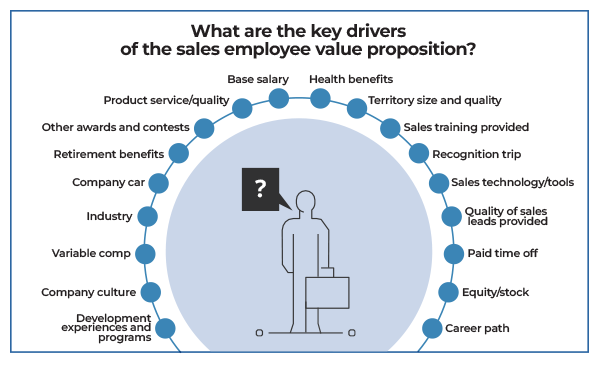
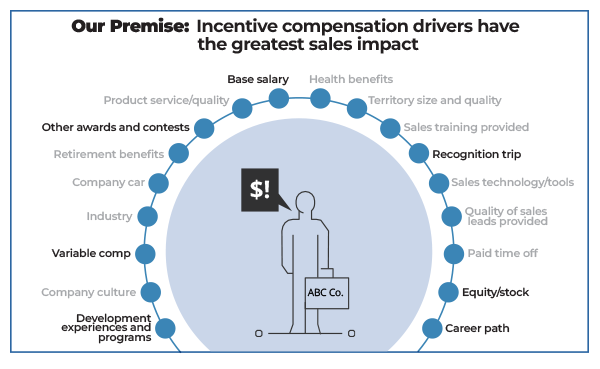
Among these, incentive compensation drivers have the greatest behavioral impact.
These include:
- Base salary
- Variable compensation
- Awards and contests
- Recognition
- Equity or long-term incentive (LTIs)
- Career pathing and development experiences
The 3×2 framework: cash, non-cash, and time
To help sales leaders design the right mix, we use a 3×2 total rewards toolkit, a simple but powerful model that classifies rewards across two dimensions:
- Cash vs non-cash (monetary vs. experiential or symbolic)
- Short-, medium-, and long-term effectiveness
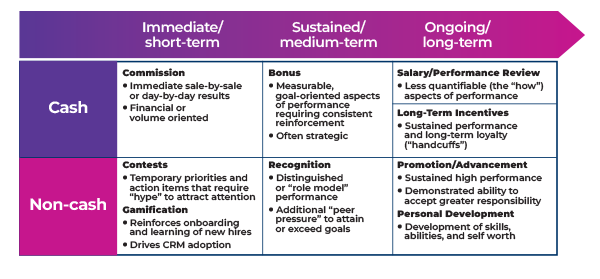
In this framework:
- Short-term tools (monthly to quarterly) include commissions, bonuses, and contests.
- Medium-term tools (quarterly to annual) include recognition programs, gamified challenges, and performance reviews.
- Long-term tools (annual and ongoing) include promotions, LTIs, and development opportunities.
Most companies focus heavily on the short term, but true differentiation comes from mastering the full spectrum.
What salespeople value most
Salespeople told us, loud and clear, what matters to them most:
- Public acknowledgement in meetings or newsletters
- Monetary rewards like bonuses, raises, or gift cards
- Personal thank yous from leaders or peers
- Awards and certificates
- Promotions and growth opportunities
- Team celebrations and shared wins
- Positive feedback from clients or customers
Recognition amplifies compensation; it adds meaning to money.
How fair pay and recognition work together
Our research examined two key engagement drivers:
- Whether salespeople feel they are paid fairly, and
- Whether they feel confident their good work will be recognized.
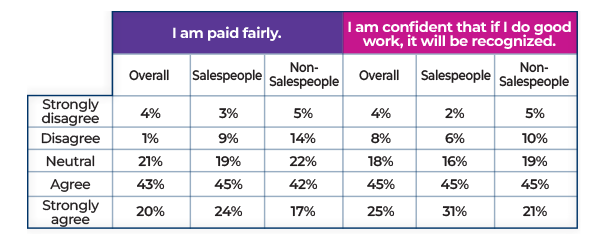
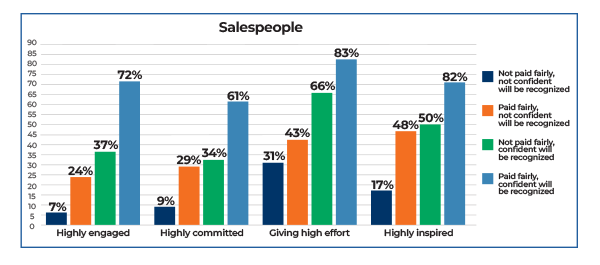
Recognition plays an outsized role in driving engagement. Salespeople who feel both underpaid and unrecognized score dramatically lower on engagement across every metric.
Activating the levers
The 3×2 model helps sales leaders decide which levers to pull based on their business challenge.
- Retention challenge? Lean on long-term tools like LTIs, career pathing, development.
- Performance challenge? Focus on short-term levers like contests, gamification, recognition.
- Attraction challenge? Highlight total rewards transparency and culture alignment.
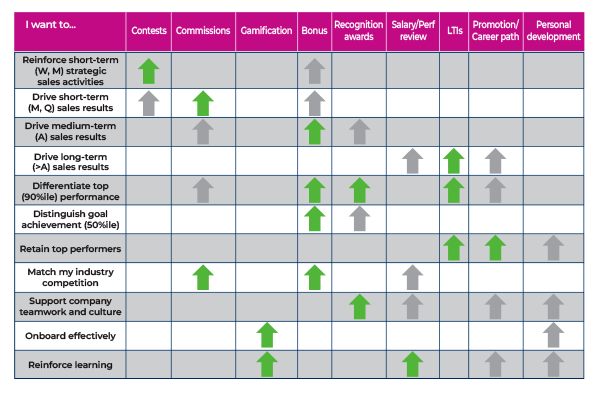
Using this balanced approach, organizations can:
- Strengthen their employer brand
- Differentiate in a competitive talent market
- Increase both sales performance and retention longevity
Turning insight into action
Cash motivates, but culture retains. Recognition, growth, and meaningful work transform a compensation plan into a commitment plan.
Key takeaways:
- Sales compensation must evolve with technology, diversity, and shifting employee expectations.
- Salespeople who feel both fairly paid and recognized are significantly more engaged.
- The 3×2 Total Rewards Toolkit helps leaders balance short-and long-term motivators.
- Recognition adds meaning to compensation and strengthens retention.
- Aligning the right levers to the right business goals turns compensation into a competitive advantage.
Hear from our expert
Amy Stern, Vice President, Employee Performance Group